



In This Guide
$4,000 is a strong engagement ring budget. It’s enough to get something that photographs exceptionally well without compromising on cut or certification. At this price point, the decision between lab grown and natural becomes more interesting — lab grown still wins on size, but natural buyers can finally get a 1-carat stone with good quality grades.
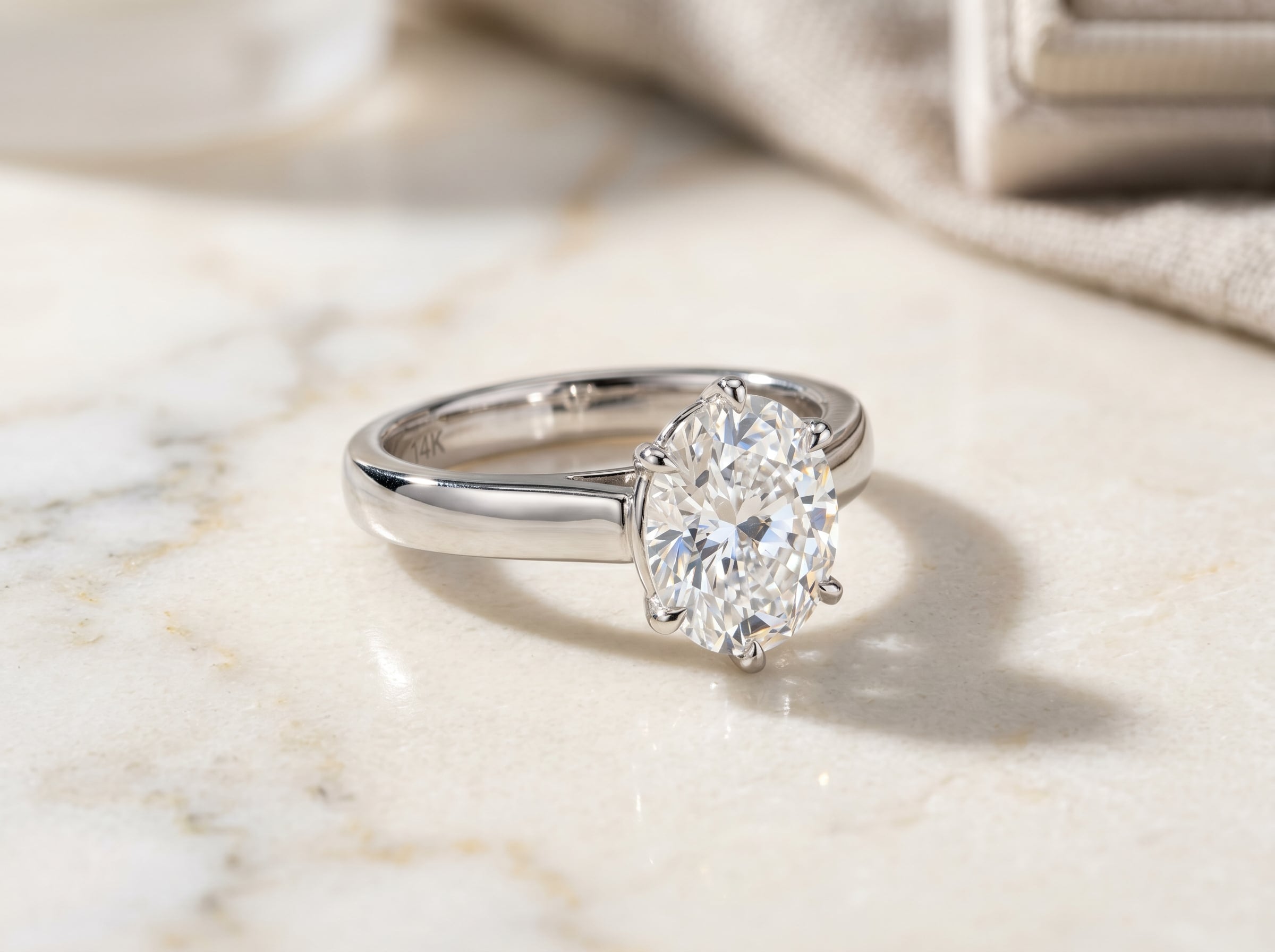
Lab Grown vs Natural Diamond at $4,000
| $4,000 Budget | Lab Grown Diamond | Natural Diamond |
|---|---|---|
| Carat size (round) | 1.8 – 2.3 ct | 1.0 – 1.3 ct |
| Carat size (oval) | 2.2 – 2.8 ct | 1.1 – 1.4 ct |
| Certification | IGI | IGI |
| Cut quality | Excellent | Excellent |
| Color / Clarity | G / VS2 or VVS2 | G / VS2 |
| Setting | 14k or 18k gold, platinum possible | 14k or 18k gold |
| Resale value | Low | Moderate (better at 1ct+ sizes) |
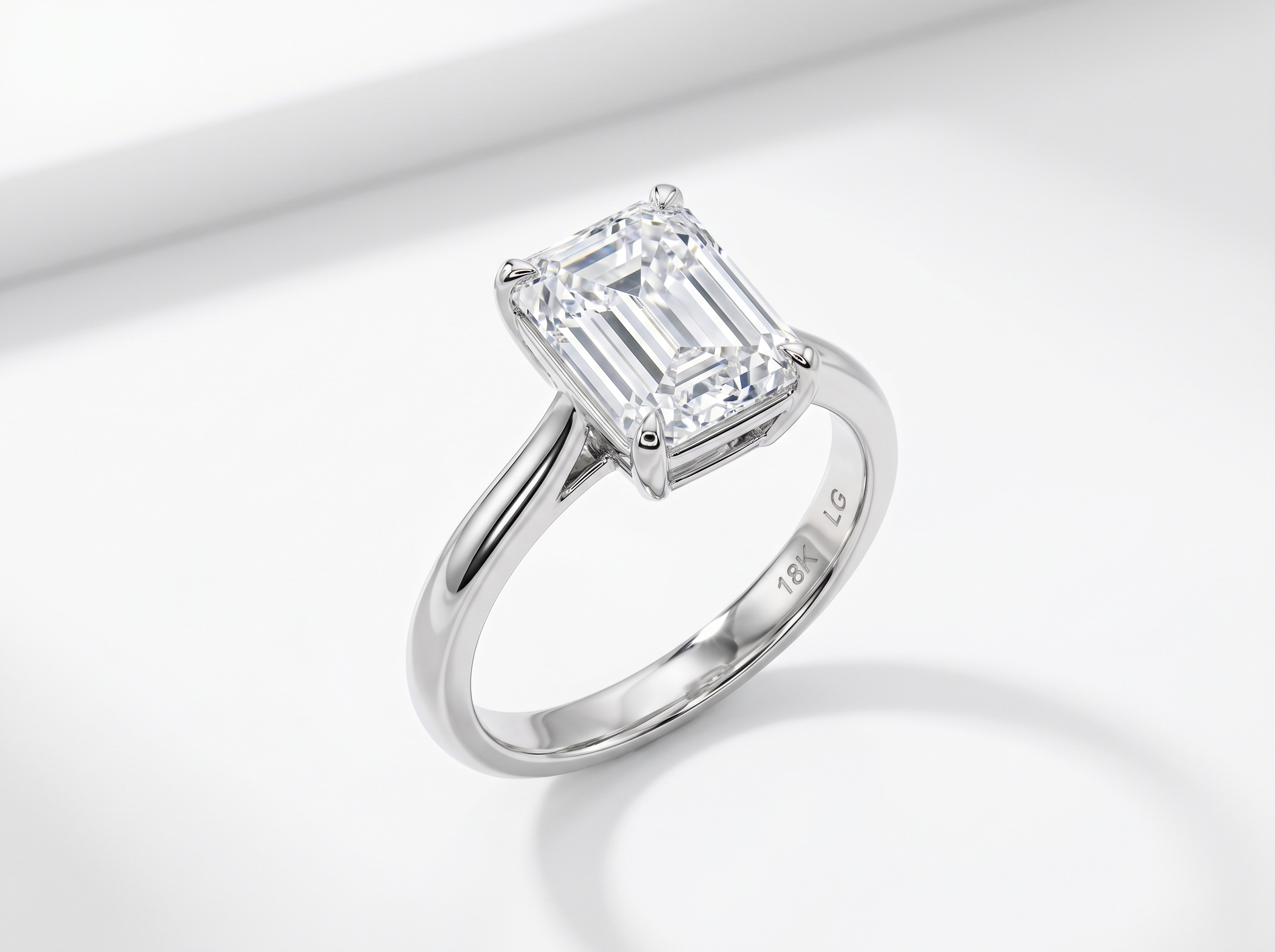
Browse our 2-carat lab grown diamond rings to see what $4,000 delivers in lab grown, and our 2-carat natural diamond rings for comparison — the price difference between equivalent quality at 2 carats makes the lab grown advantage clear.
What You Actually Get: Specs and Settings
| Spec | Target at $4,000 | Why |
|---|---|---|
| Cut | Excellent | Always Excellent — no reason to compromise at this budget |
| Color | F, G, or H | F gives true colorless appearance; G–H are virtually identical at lower cost |
| Clarity | VS2 to VVS2 | Both eye-clean; budget exists to go VVS2 if desired |
| Carat (lab grown) | 2.0–2.3ct round / 2.4–2.8ct oval | Comfortable 2ct+ range at $4,000 |
| Setting | 14k or 18k gold, pavé or solitaire | More setting flexibility than lower budgets |
Best Diamond Shapes at a $4,000 Budget
| Shape | Expected Carat at $4,000 (Lab Grown) | Notes |
|---|---|---|
| Round Brilliant | 1.8 – 2.3 ct | Most sparkle, most popular; 2ct+ is impressive at this budget |
| Oval | 2.2 – 2.8 ct | Excellent value, appears larger than round, finger-lengthening |
| Cushion | 2.0 – 2.6 ct | Romantic and substantial at this carat range |
| Emerald | 2.0 – 2.5 ct | Sophisticated step-cut; prioritize VS2+ for clarity |
| Radiant | 2.0 – 2.5 ct | Rectangular with brilliant-cut facets; lots of fire |
A 2.5-carat oval lab grown at $4,000 is a truly striking ring. If the recipient is someone who notices jewelry, this is the configuration that reliably gets noticed.
What to Avoid at $4,000
Don’t pay for IF/VVS1 clarity unless you want to. VS2 and VVS2 are both eye-clean to any observer — even a jeweler looking casually. FL and IF clarity grades exist for collector stones, not everyday engagement rings. The price difference between VS2 and VVS1 at 2 carats can be $600–$1,000. That money is better spent on carat size or a better setting.
Don’t reflexively choose platinum. White gold is rhodium-plated to a bright white appearance and looks identical to platinum day-to-day. Platinum costs 30–45% more for the setting. At $4,000, that’s real money that could go toward a larger or better-graded center stone. Consider platinum after the ring needs its first replating, if you decide the metal durability matters to you.
Our Recommendation at $4,000
The $4,000 Sweet Spot
Lab grown diamond, 2.2–2.5 carat oval or 2.0 carat round, G color, VS2 clarity, Excellent cut, IGI certified, 14k white gold thin pavé band or simple solitaire. This is a ring that photographs remarkably well, looks substantial on the finger, and leaves enough budget for a setting with some detail.
If natural is the preference: 1.1–1.2 carat round, G/VS2, Excellent cut, IGI certified, 14k solitaire. This is a legitimate, well-specified natural diamond ring at $4,000 — a size where natural stones start to have real visual presence.
See our 2-carat lab grown diamond rings and 3-carat lab grown diamond rings for current options in this budget range.
Frequently Asked Questions
Is $4,000 a good engagement ring budget?
Yes — it’s a strong budget in 2026. For lab grown diamonds, $4,000 gets you solidly into the 2-carat range with Excellent cut and full IGI certification. For natural diamonds, it’s enough for a 1.0–1.2 carat stone with quality grades intact. Either way, this budget produces a ring that looks genuinely impressive without compromise.
What size diamond can I get for $4,000?
For lab grown: 1.8–2.3 carats in round brilliant, or 2.2–2.8 carats in oval, in G/VS2, Excellent cut. For natural: 1.0–1.3 carats in round, same quality grades. The carat difference reflects the ~80% price gap between lab grown and natural at this carat weight.
Can I get a 2-carat diamond for $4,000?
Yes, comfortably in lab grown. A 2-carat round brilliant lab grown in G/VS2, Excellent cut runs approximately $2,800–$3,600 as a complete ring, leaving budget for a quality setting. See our 2-carat lab grown rings for current availability.
Should I buy lab grown or natural at $4,000?
Lab grown for size: you get a 2+ carat stone vs a 1-carat natural. Natural for origin: if a mined diamond matters to you or your partner, $4,000 is enough for a well-specified 1.1-carat natural stone. This is the first budget tier where both choices are genuinely reasonable — the decision comes down to values, not quality.
What’s the best diamond shape for $4,000?
Oval or round, depending on preference. In lab grown, oval gets you 2.2–2.8 carats at $4,000 — a very striking stone size. Round gets you 1.8–2.3 carats with the highest brilliance. Both are strong choices at this budget. Emerald cut is also compelling here because the VVS2 clarity grades available at $4,000 bring out the best in its step-cut faceting.
Should I get platinum or gold at $4,000?
White gold (14k or 18k) for most buyers. White gold is rhodium-plated to a bright white appearance and looks identical to platinum in daily wear. Platinum costs 30–45% more for the setting. At $4,000, that difference is better spent on a larger center stone. Consider platinum after the ring’s first replating if metal durability becomes a priority.
Is VVS clarity worth paying for at $4,000?
Not necessarily. VS2 is eye-clean — no inclusion is visible without magnification. VVS2 is also eye-clean. The difference between them is only visible under 10x loupe. At $4,000, if VS2 vs VVS2 means a 0.2-carat difference in stone size, VS2 is the better value. If you simply want VVS for personal satisfaction and the budget is comfortable, it’s a fine choice — just not a visible one.
See What $4,000 Gets You at Brillianteers
IGI-certified lab grown diamonds from 1.5 to 3+ carats. Natural diamonds from 0.9 to 1.5 carats. All at prices below major retailers.