



In This Guide
$1,000 used to be a tough engagement ring budget. For a natural diamond, it bought a half-carat stone with compromised quality or a small cluster ring that didn’t look like much. Lab grown diamonds changed that equation entirely. In 2026, $1,000 gets you a fully certified, solid-gold ring with a stone that looks genuinely good on a finger.
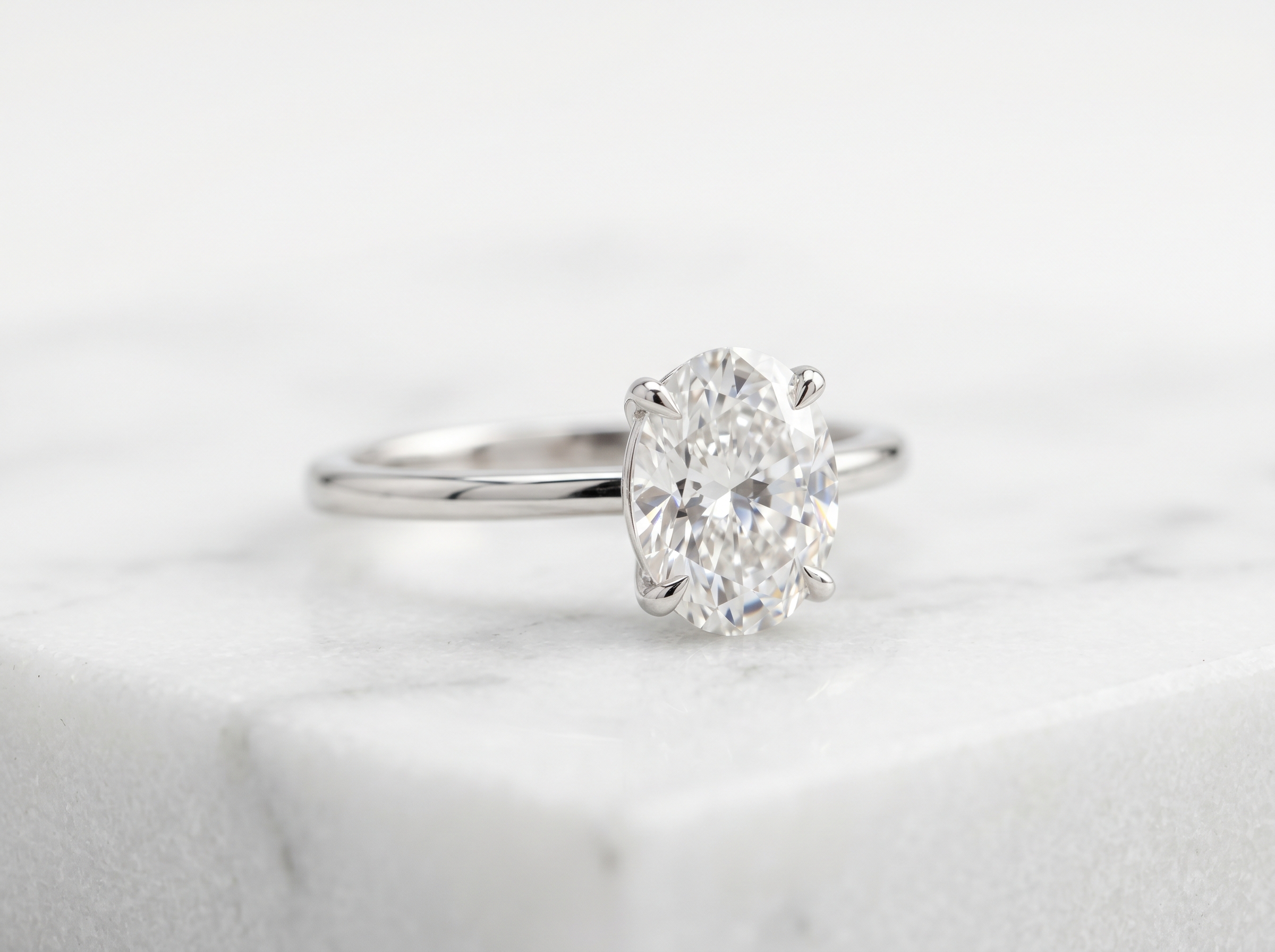
Lab Grown vs Natural Diamond at $1,000
| $1,000 Budget | Lab Grown Diamond | Natural Diamond |
|---|---|---|
| Carat size (round) | 0.8 – 1.1 ct | 0.35 – 0.5 ct |
| Carat size (oval) | 1.0 – 1.3 ct | 0.4 – 0.55 ct |
| Certification | IGI | IGI |
| Cut quality | Excellent available | Excellent available |
| Color / Clarity | G / VS2 | G / VS2 |
| Setting | 14k white or yellow gold | 14k white or yellow gold |
| Resale value | Low | Better, but very limited at this size |
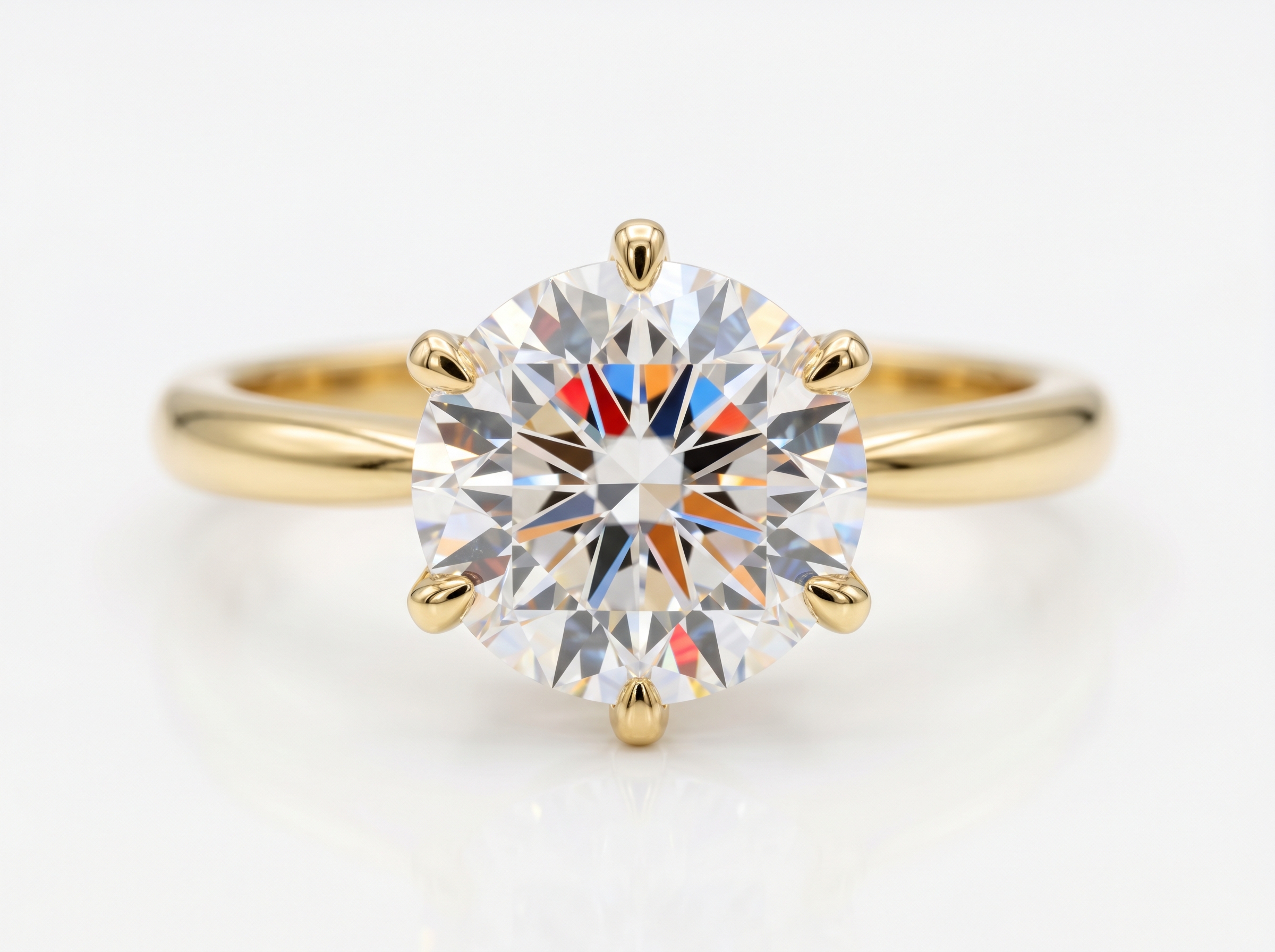
The resale argument for natural at $1,000 is minimal — a 0.4-carat natural purchased at retail won’t sell for anything close to what you paid. If you want to spend $1,000 on an engagement ring, the only question is whether the recipient cares about natural diamond origin specifically. If not, lab grown is the right call.
What You Actually Get: Carat, Quality, and Setting
| Spec | Target at $1,000 | Why |
|---|---|---|
| Cut | Excellent or Very Good | Most visible quality factor — never skip this |
| Color | G or H | Eye-clean colorless; D–F costs more with no visible difference |
| Clarity | VS2 or eye-clean SI1 | No visible inclusions; VVS is invisible and wastes budget |
| Carat | 0.9–1.1ct round / 1.1–1.3ct oval | Realistic in lab grown at $1,000 |
| Setting metal | 14k white or yellow gold | Durable and beautiful; platinum costs 40% more for same appearance |
Best Diamond Shapes at a $1,000 Budget
| Shape | Expected Carat at $1,000 (Lab Grown) | Notes |
|---|---|---|
| Round Brilliant | 0.8 – 1.1 ct | Most sparkle, most popular, highest price per carat |
| Oval | 1.0 – 1.3 ct | Appears larger than round, elongates the finger |
| Cushion | 1.0 – 1.2 ct | Romantic, vintage look, lower price per carat |
| Pear | 1.0 – 1.3 ct | Distinctive look, finger-lengthening effect |
| Princess | 0.9 – 1.1 ct | Square and geometric; corners need protective setting |
If your partner hasn’t expressed a strong preference for round, oval is the best value at $1,000. A 1.2-carat oval looks substantially larger than a 0.9-carat round on the finger, and both are available at this budget in lab grown.
What to Avoid at $1,000
Don’t choose a halo to make a small stone look bigger. At $1,000 lab grown, you can afford a 1-carat center stone outright. A solitaire with a 1-carat stone looks better than a halo around a 0.5-carat center, and costs the same or less.
Don’t buy moissanite at this price point. Moissanite makes sense when lab grown diamonds are out of budget. At $1,000, lab grown diamonds are in budget. A 1-carat IGI-certified lab grown diamond is a real diamond — moissanite is not.
Don’t shop at physical jewelry stores. A ring that costs $1,000 from an online specialist will cost $1,800–$2,500 at a mall jeweler for the same IGI-certified specs. Verify the certificate number at igi.org and the stone is identical.
Our Recommendation at $1,000
The $1,000 Sweet Spot
Lab grown diamond, 1.0–1.1 carat oval or 0.9–1.0 carat round, G or H color, VS2 clarity, Excellent cut, IGI certified, 14k white or yellow gold simple solitaire. This is a complete, beautiful ring that requires no apology for the budget. If yellow gold is preferred, H color is invisible in that metal and saves enough to push to a slightly larger stone.
Browse our engagement rings under $2,000 — many of the best options at $1,000 sit within that collection — or go directly to our 1-carat diamond ring collection to see what’s available at and around this budget.
Frequently Asked Questions
Is $1,000 enough for a diamond engagement ring?
Yes. In 2026, $1,000 buys a lab grown diamond engagement ring with a 0.9–1.1 carat center stone in G/VS2, Excellent cut, IGI certified, in 14k gold. This is a real diamond ring that looks genuinely impressive. The idea that $1,000 is inadequate comes from natural diamond pricing — lab grown changed that reality.
What size diamond can I get for $1,000?
For a lab grown diamond ring: 0.8–1.1 carats in round brilliant, or 1.0–1.3 carats in oval, in G/VS2, Excellent cut, 14k gold. For a natural diamond ring: approximately 0.35–0.5 carats in comparable quality. Both are real, certified diamonds — the carat difference reflects the 70–80% price gap between lab grown and natural.
Can I get a 1-carat diamond ring for $1,000?
Yes, in lab grown. A 1-carat round brilliant lab grown diamond in G/VS2, Excellent cut typically runs $900–$1,100 as a complete ring. Choosing H color or an oval/cushion shape (which cost less per carat than round) makes it easier to hit 1 carat within the $1,000 budget. See our 1-carat diamond ring collection for current availability.
Should I buy lab grown or natural for a $1,000 engagement ring?
Lab grown, clearly. At $1,000, a natural diamond gets you approximately 0.4 carats. A lab grown diamond gets you approximately 1.0 carat. Both are real diamonds with identical physical properties. Unless there’s a specific reason the recipient requires a natural stone, lab grown is the straightforward choice at this budget.
Is moissanite a better choice at $1,000?
No. Moissanite makes sense as an alternative to diamond when budget is too tight for a lab grown diamond. At $1,000, you can buy a 1-carat lab grown diamond — a real diamond with IGI certification. Moissanite is a different mineral (silicon carbide) that simulates diamond. Given that lab grown diamonds are available at this price, there’s no reason to buy moissanite for an engagement ring if a diamond is what you want.
What’s the best ring style at $1,000?
Simple solitaire, 14k white or yellow gold, four or six prong setting. A solitaire lets the center stone be the focus and costs less than halo or pavé designs, which means more budget goes to the diamond. Thin pavé bands are also available at this price point if some extra detail is wanted. Avoid halos at $1,000 — with lab grown, you can afford a stone large enough not to need one.
Does Brillianteers have engagement rings around $1,000?
Yes. Our rings under $2,000 collection includes several options at and around the $1,000 mark, including IGI-certified lab grown solitaires in round, oval, and cushion. All certified stones with real photography so you can see exactly what you’re buying.
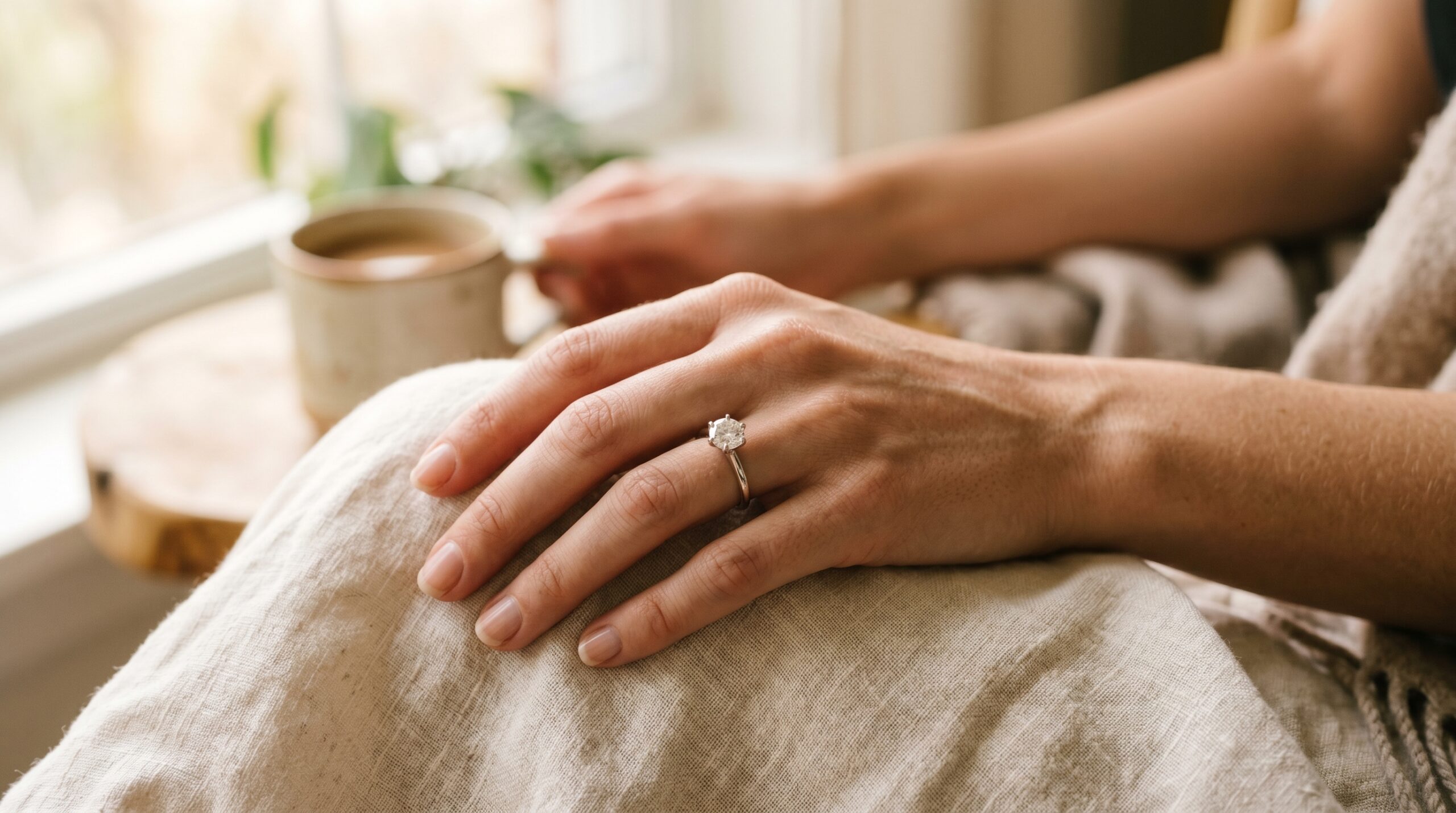
See What $1,000 Gets You at Brillianteers
IGI-certified lab grown diamonds. Real stone photography. No retail markup.