



When it comes to shopping for diamond jewelry, there are lots of variables to consider. You need to be well aware of the 4 C’s of diamonds: Cut, Carat, Clarity, and Color. This article will discuss the Diamond Color in more detail. We will discuss what Diamond Color is, how this affects the value of a diamond, and the common questions asked about Diamond Color answered by our leading jewelry experts. You can learn more about the 4 C’s in our article The Ultimate Guide to Buying Diamond Jewelry
What is the Diamond Color?
As colorless as it may look, natural earth-mined diamonds are almost never colorless. They always have some hint of color. In fact, diamonds can have grey, yellow, pink, green, and brown colors. The diamond’s color greatly affects its overall price. This is why it’s important to understand just how this does.
How is Diamond Color Measured?
Diamond color is measured by experts who provide diamond certifications for every stone. The most widely used diamond color grading system was originally developed by the Gemological Institute of America (GIA) in the 1950s. Many well known and highly respected gemological laboratories from around the world use the same system and language to describe the presence (or lack) of color in a diamond.
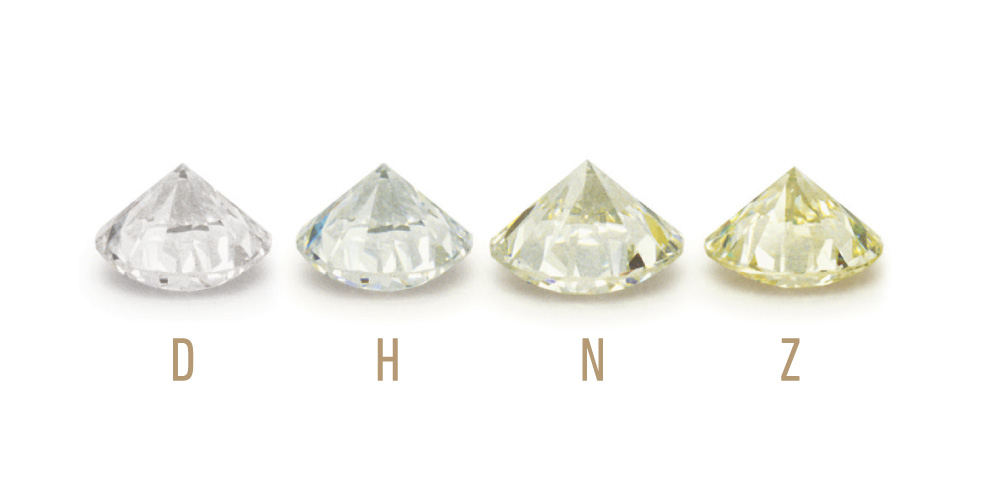
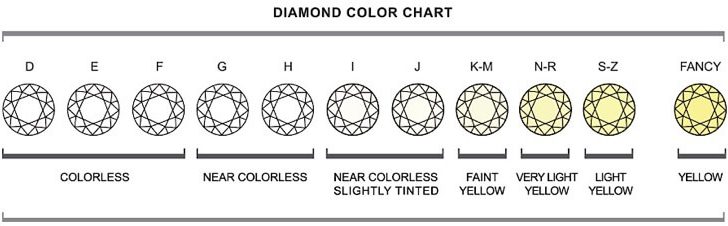
Most diamonds range from colorless or near-colorless to light yellow or brown. The standard diamond color grading scale distinguishes between them using a letter grade with D being colorless and Z being light yellow or brown. Diamond colors are often grouped into five categories: colorless (D-F), near-colorless (G-J), faint yellow (K-M), very light yellow (N-R), and light yellow (S-Z).
A Guide to Choosing the Diamond Color
If you start talking to an expert about diamond color, it’ll be a little overwhelming. Truth be told, unless you have the right tools, and the professional training, it’ll be really difficult to tell the color difference between different stones. But this difference does make a big difference in the price of a diamond. Here’s a quick guide on how to choose the diamond color.
Choose According to the Band Color
The first thing to consider is whether your ring, pendent, or earrings will be made in White, Yellow, or Rose gold. The color grade of your diamond will be much less significant if the ring is in Yellow or Rose gold. It would probably be impossible to notice even a J-K colored diamond when it is set in one of these gold settings. The rule is, if it’s against a Yellow Gold or Rose Gold band, the color will not be noticeable, therefore you can go for the more affordable diamond color choice.
If you’re choosing a White Gold or Platinum band, the color of a diamond will be far more noticeable. This is why it’s recommended that you go towards the more colorless end of the spectrum when choosing your diamond.
Choose According to The Color of Your Accent Stones
To make sure that your diamond looks as white or colorless as possible, be sure to select side stones that are the same or lower in color than the center diamond. So for example, if your center diamond is H color, the side diamonds should be H, I, or J color. Choosing side diamonds that are significantly higher in color could make the center diamond appear more yellow.
Don’t worry too much about the Diamond Color Grading
A color difference between F and H which is noticeable when the diamonds are loose but is not very noticeable when the diamonds are set in rings. For this reason, we usually recommend a G or an H colored diamond and better clarity to get the best value for your money. If you’re not planning on selling your diamond jewelry in the future with the hopes of earning money, then you don’t have to worry too much about the diamond color grading. The color grade from G to H look almost colorless with the naked eye, and will not cost as much as the colorless graded diamonds.
Consider the Ring Setting Design
Another thing to consider is the type of setting you are getting. A ring with a halo would usually show the color of the diamond more since there are more gold and diamonds around it. On the other hand, A plain solitaire ring will show the clarity more than it will the diamond color. If you are looking to choose a more budget-friendly engagement ring, choose a solitaire diamond engagement ring. But if you want an engagement ring with a halo design or diamond accents, then it’s better to choose a diamond with less color.
Should I Invest in a Colorless Diamond?
If you’re after the perfect diamond to buy as an investment, you should seek to buy a completely colorless diamond. This is the most valuable diamond according to color. In the colorless category, there are three grades: D, E, and F. Even for a highly trained diamond grader, determining between the three grades is extremely difficult. You can invest in either three, and still, have a good diamond investment in your hands.
What is the More Affordable Diamond Color Grades?
Most diamond engagement rings are set with a diamond that has a color grade of either G, H, or I. These diamond colors offer the best value for shoppers. It is virtually impossible to see traces of color in these diamonds, especially if they are mounted on the wedding band. They look nearly the same as a colorless diamond but are significantly more affordable.
What are Fancy Colored diamonds?
You’ve probably seen big pink, yellow, or brown diamonds on engagement rings before. Diamonds that are light yellow, pink, or light brown are very fashionable and when set in the right type of mounting can rival higher colored diamonds for beauty. Perfectly Yellow or Brown diamonds are considered fancy colored diamonds and are usually also expensive. A great way to get a similar appearance is to get a white diamond with a low color grade. These do not fall into the fancy colored diamonds and thus are far less expensive, but will look as good as the rare fancy colored diamonds.
Can You Grade a Diamond Yourself?
Grading a diamond’s color by looking at it face up is very difficult. In most cases impossible. The sparkle and reflections make it hard to notice color differences. This is one of the reasons why choosing a lower color grade in rings is a good idea for a compromise.
As such, the grading is best viewed from the side of the diamond. And it is usually in comparison to other diamonds. It is very difficult for our eyes to determine the color without comparing it to another diamond.
Below are the same diamonds as above now from a side view where it’s much easier to notice the color difference (H on the left and F on the right)
What is Diamond Fluorescence?
Don’t be concerned if you walk into a nightclub and notice that your diamond is glowing blue! About one-third of all gem-quality diamonds have an effect known as fluorescence which causes them to glow when they are exposed to ultraviolet radiation.
Historically speaking, fluorescence has been treated as an undesirable trait. Diamonds that have fluorescence can sell for up to a 15% discount compared to non-fluorescent diamonds. Fluorescence, however, can actually have a positive effect on a diamond and appeal to savvy shoppers who want a bargain.
Diamonds with traces of yellow color (J – M) can appear much higher in color if they display medium to strong blue fluorescence. The reason for this is that fluorescence can be stimulated by UV rays present in sunlight and many artificial light sources. Blue and yellow are complementary colors, and since most diamonds fluoresce blue, they essentially cancel each other out. This makes the diamond appear significantly whiter.
Diamonds with Fluorescence usually appear whiter and also cloudier. A diamond with very slight Fluorescence can be an advantage. But more than that would have a “cloudy” look and it will lack the sparkle and brilliance you would want in your diamond.
Final Thoughts
Choosing the right diamond color can affect the overall value of your engagement ring. Follow these tips when choosing a diamond color to help you find the perfect diamond engagement ring for the perfect budget you are aiming for. Learning more about diamond color will not only help you when you shop for diamond jewelry, but it will help you save money or make better investment decisions with your purchase.