


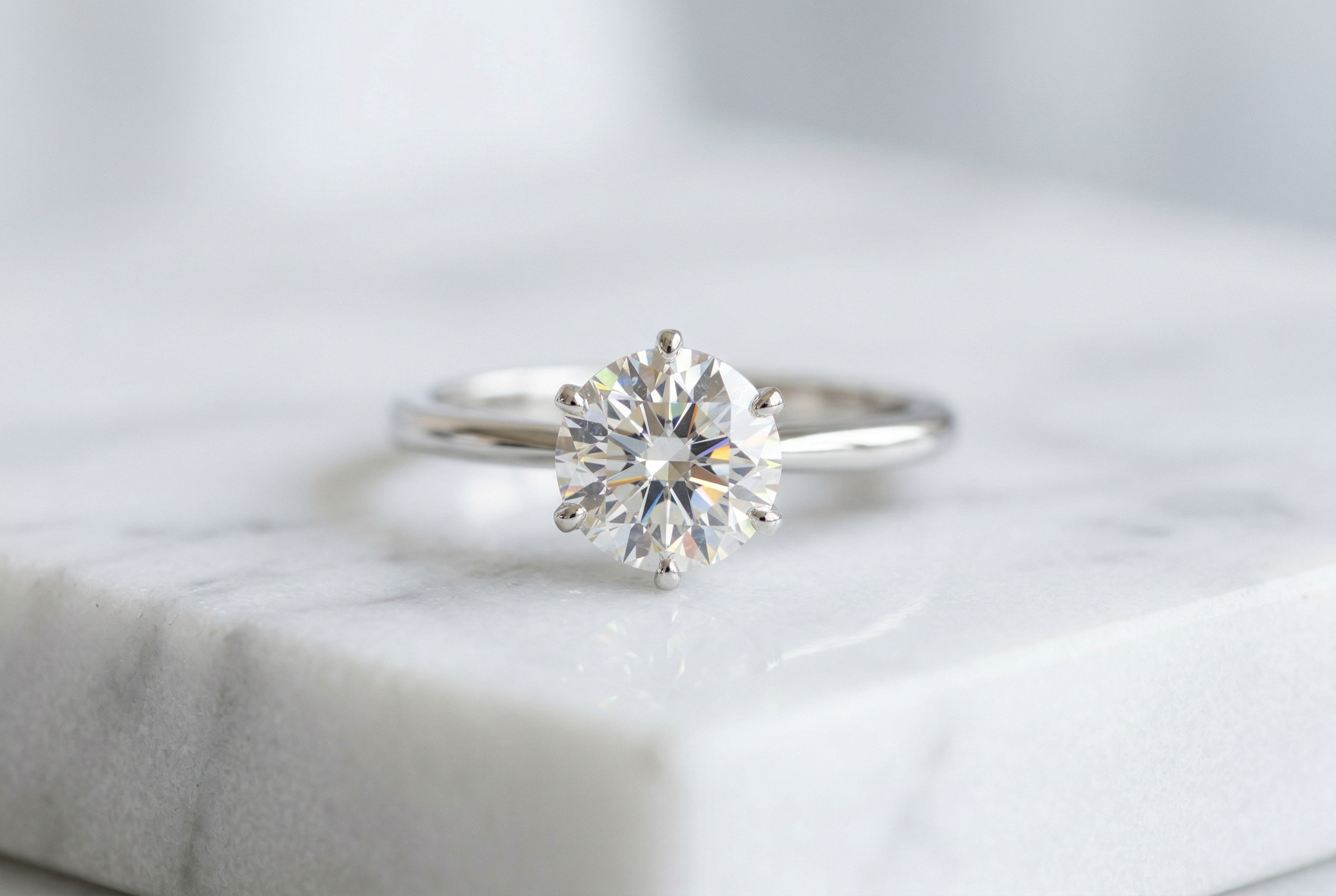
Lab grown diamond engagement rings have crossed from niche to mainstream. They are chemically, physically, and optically identical to mined diamonds — confirmed by IGI and the FTC — and their prices have dropped 70–80% since 2021. The real question now is which retailer to buy from, because the quality and experience gap between them is real.
This guide breaks down five major online retailers on pricing, certification, inventory size, return policy, and where each genuinely excels — so you can match the right retailer to what matters most.
Retailer Comparison at a Glance
All five retailers on this list sell IGI or GIA-certified lab grown diamonds. The meaningful differences are pricing model, inventory size, return window, and shopping experience. Brillianteers leads on price. James Allen leads on visual tools. Blue Nile leads on inventory. Brilliant Earth leads on sustainability positioning. Clean Origin offers the longest return window in the industry.
| Retailer | Starting Price (1ct lab) | Certification | Return Policy | Best For |
|---|---|---|---|---|
| Brillianteers | From ~$800 | IGI Certified | 30 days | Best price, 20+ yr expertise |
| James Allen | From ~$1,200 | IGI / GIA | 30 days | 360° imaging, large selection |
| Blue Nile | From ~$1,100 | IGI / GIA | 30 days | Largest inventory, financing |
| Brilliant Earth | From ~$1,400 | IGI / GIA | 30 days | Ethical positioning, showrooms |
| Clean Origin | From ~$950 | IGI | 100 days | Lab-only specialist, long return |
Brillianteers — Best Overall Value
Brillianteers offers the most competitive pricing on IGI-certified lab grown diamonds among major online retailers. Starting under $800 for a 1-carat lab grown stone, with sourcing built on direct industry relationships since 2011. If your priority is getting the most diamond for your money without compromising on independent certification, Brillianteers is the strongest option.
Brillianteers was co-founded in 2011 and has been sourcing, grading, and selling diamonds directly ever since. That matters because the retail price of a lab grown ring is largely determined by how many intermediaries sit between the grower and the buyer. Brillianteers cuts that chain short, which is why their pricing sits 15–25% below retailers with heavier marketing overhead.
Their lab grown collection covers all the major cuts: round brilliant, oval, cushion, emerald, pear, radiant, and princess. Every stone comes with independent IGI certification verifying cut, color, clarity, and carat weight. Buyers looking at larger stones can browse 2-carat lab grown engagement rings or step up to a 3-carat lab grown ring — both at prices that would have been impossible in the natural diamond market.
The other differentiator is depth of expertise. Most lab-grown-only retailers launched after 2018. Brillianteers has been advising customers on diamond selection since before lab grown was mainstream, which means their team can genuinely guide cut quality and stone selection rather than just fulfilling an order.
James Allen — Best for Visual Shopping
James Allen pioneered 360° high-definition diamond imaging. Every diamond on the site can be rotated and inspected at up to 40x magnification before purchase — a genuine advantage when buying online without seeing the stone in person. Their lab grown inventory is one of the largest online. Price premium over Brillianteers typically runs 15–25%.
James Allen’s Diamond Display Technology changes the online buying experience in a meaningful way. You can rotate a stone, zoom in on inclusions, and check symmetry before committing. Their AI ring builder lets you visualize any diamond in any setting configuration. For buyers who need to see before they buy, this platform delivers the closest thing to an in-store experience without leaving home.
Their lab grown selection spans thousands of stones across all cuts, graded by both IGI and GIA. They run seasonal promotions that can bring prices down meaningfully — worth checking if your timing allows. Virtual consultations with trained gemologists are available at no charge, which is useful for buyers who want to talk through stone selection before deciding.
The trade-off is price. Expect to pay 15–25% more than Brillianteers for equivalent IGI-certified stones. If the visual shopping experience is a priority and the premium doesn’t concern you, James Allen is the best platform in that category.
Blue Nile — Best for Large Inventory
Blue Nile carries one of the largest lab grown diamond inventories online, with thousands of certified stones across every cut and carat weight. Their financing program is the most developed on this list, with 0% APR promotional options that make larger stones more accessible on a monthly budget. Prices are comparable to James Allen.
Blue Nile’s search and filter tools are among the best in the industry. You can simultaneously filter by exact carat range, cut grade, color, clarity, and shape, which makes finding a specific combination far easier than browsing through a generic inventory. For buyers who know exactly what specs they want, this is the most efficient platform to shop.
The financing program is worth noting for anyone stretching toward a larger stone. Blue Nile regularly offers 0% APR promotional financing for 12–24 months, which can make a 2-carat lab grown ring meaningfully more accessible on a monthly basis. They accept both IGI and GIA certifications, so buyers comfortable with either grading standard can shop without adjusting expectations.
Service consistency has been a complaint in recent reviews for a retailer of this scale. Worth reading recent customer reviews before purchasing, particularly for custom or resizing requests.
Brilliant Earth — Best for Ethical Branding
Brilliant Earth was among the first major retailers to market lab grown diamonds as an ethical alternative to mining. They have physical showrooms in 30+ US cities — no other online retailer on this list comes close. Their pricing runs 20–30% higher than comparable retailers, but for buyers who want the option to try before committing, the showroom network is a real differentiator.
Brilliant Earth has done the most substantive work connecting lab grown diamonds to a sustainability story. They donate 5% of profits to responsible mining initiatives and document this publicly. If that positioning matters to you or your partner, it’s genuine rather than just marketing copy.
The showroom presence is the most practical differentiator. If you’re not comfortable committing to an engagement ring purchase entirely online, Brilliant Earth is the only retailer on this list where you can walk in, try on ring styles, and speak with a consultant face-to-face before deciding. Their certification standards are high and the online experience is polished.
The price premium is real — expect to pay 20–30% more than Brillianteers or James Allen for equivalent stones. That’s the cost of the showroom infrastructure and sustainability positioning. For buyers who need the in-person option, it’s worth it.
Clean Origin — Best Return Policy
Clean Origin offers a 100-day return window — the longest in the engagement ring industry by a significant margin. The standard across all other retailers on this list is 30 days. They are a lab-grown-only specialist with no natural diamond inventory, which means their entire team’s knowledge is focused on lab grown. Pricing typically sits between Brillianteers and James Allen.
The 100-day return window is Clean Origin’s clearest competitive advantage. If you’re a buyer who needs three months of wearing the ring before fully committing to the decision, that’s a meaningful difference from any other retailer in this space. Ring purchases are significant decisions, and an extended window removes a lot of pressure.
Being lab-only means their staff are specialists. They aren’t splitting time educating buyers on natural vs. lab grown — they go deep on the specifics of CVD vs. HPHT growth methods, how growth method affects grading, and why certain IGI grade factors matter more specifically for lab grown stones.
Their inventory is smaller than James Allen or Blue Nile but well-curated. Virtual try-on tools that show rings on hand models at different finger sizes are a genuinely useful shopping feature. Pricing is reasonable for what they offer. Worth considering if the extended return window aligns with how you make purchasing decisions.
What to Look for Before You Buy
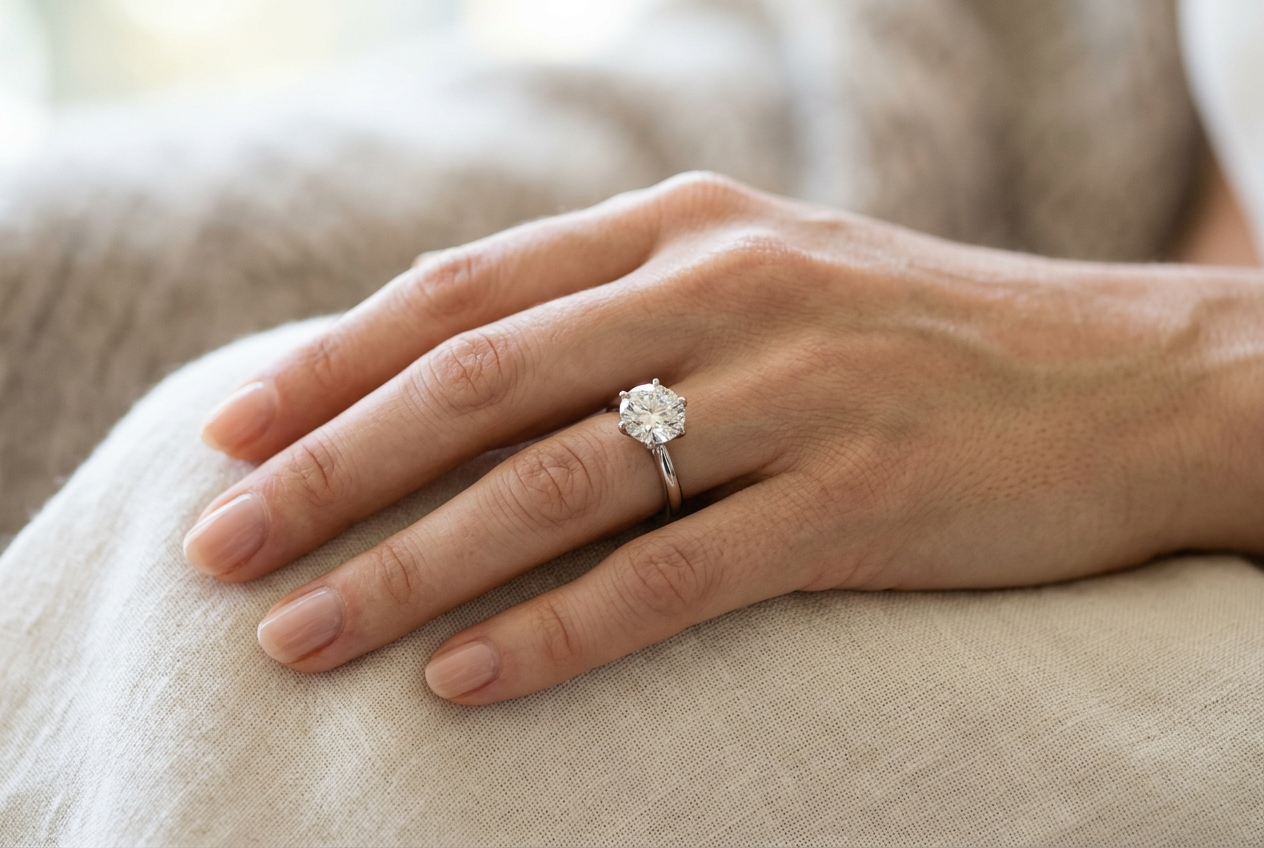
Four non-negotiables before buying any lab grown diamond ring online: independent certification from IGI or GIA only, a cut grade of Excellent or Very Good, a return policy covering resizing and not just exchanges, and transparent separate pricing for the diamond and setting. Any retailer using in-house certificates is a hard pass.
Certification is the most important check. IGI and GIA are the only two accepted independent grading labs for lab grown diamonds. An in-house certificate is the retailer verifying its own product — that’s not independent verification. Walk away from any diamond with only an in-house grade, regardless of price or how convincing the pitch sounds.
Cut quality matters more than carat weight. A well-cut 1.5-carat stone will outperform a poorly cut 2-carat in brilliance and visual presence. Always prioritize Excellent or Very Good cut grades. The difference in sparkle between an Excellent and a Fair cut is dramatic and visible to the naked eye. You can compare the impact clearly on Brillianteers’ 1.5-carat ring selection.
Confirm the return policy includes resizing. Ring sizing is frequently off by half a size — a good retailer covers one free resize within 60–90 days. If a retailer’s return policy doesn’t address resizing separately, ask before purchasing.
Check whether the diamond price and setting price are listed separately. Bundled pricing makes comparison-shopping impossible and often hides margin on the setting. The best retailers let you choose your stone and setting independently so you can compare equivalent stones across platforms fairly.
Lab Grown vs. Natural: Quick Decision Guide
Lab grown diamonds are the right choice if your priorities are size, quality grade, and value. Natural diamonds are the right choice if long-term rarity or resale value matters. For an engagement ring worn daily, there is no physical or visual difference — no jeweler can tell them apart without spectroscopic equipment. The only real difference is price and what you plan to do with it.
| Factor | Lab Grown | Natural Diamond |
|---|---|---|
| Price (1ct, VS2/G) | $900–$1,800 | $4,500–$6,000 |
| Appearance | Identical to natural | Identical to lab grown |
| Hardness (Mohs) | 10 | 10 |
| Certification | IGI or GIA | GIA or AGS |
| Resale value | Limited — prices declining | Higher — still depreciates |
| Best for | Size, value, daily wear | Rarity, investment collectors |
One important note: lab grown diamonds do not hold resale value the way rare natural diamonds can. Lab grown prices have dropped continuously since 2021 and the trend continues as production scales. If investment value is a meaningful consideration, natural diamonds are the more appropriate choice. For buyers focused on the ring as a symbol of commitment rather than a financial asset, the value equation heavily favors lab grown.
For couples looking at complete sets, lab diamond bridal sets that include both the engagement ring and wedding band are available at prices that would be impossible with equivalent natural stones.
How to Read a Lab Diamond Certificate
An IGI or GIA certificate grades a lab grown diamond on cut, color, clarity, and carat weight. Cut is the most important factor for visual performance — aim for Excellent or Very Good. Color D–F is colorless; G–H is near-colorless and virtually indistinguishable when set. VS1–VS2 clarity is the sweet spot for most lab grown buyers: inclusions invisible to the naked eye at a meaningful price advantage over higher grades.
Every certificate from IGI or GIA includes a unique report number that can be verified on their respective websites. Before purchasing any lab grown diamond, enter the report number on the grading lab’s site to confirm the certificate is genuine and matches the stone you’re buying. This takes 30 seconds and catches any misrepresentation before money changes hands.
For color, D–G are the most commonly purchased grades for lab grown stones. At H–I, you start to see a slight warmth in larger stones, particularly in white gold or platinum settings. For clarity, VS2 is the right call for most buyers — inclusions are invisible to the naked eye and the price difference versus VS1 is meaningful.
The certificate will also note whether the diamond was grown by CVD (chemical vapor deposition) or HPHT (high pressure, high temperature). Both methods produce identical quality end results. The growth method is disclosed because it’s traceable, not because it affects the stone’s appearance or durability. For buyers considering larger stones, 4-carat lab grown diamonds with excellent cut grades are now available at prices that were literally impossible five years ago.
Frequently Asked Questions
Are lab grown diamonds real diamonds?
Yes. Lab grown diamonds have the same chemical composition (pure carbon in a crystal lattice), optical properties, and physical hardness (Mohs 10) as mined diamonds. The FTC updated its diamond definition in 2018 to formally include lab grown stones. A gemologist cannot distinguish a lab grown diamond from a natural one without spectroscopic equipment.
How much cheaper are lab grown diamonds than natural in 2026?
Lab grown diamonds typically cost 70–80% less than equivalent natural diamonds. A 1-carat natural diamond in VS2/G grade retails for $4,500–$6,000. The same specifications in lab grown runs $900–$1,800 depending on the retailer. The price gap has widened every year since 2020 as lab grown production has scaled globally.
Do lab grown diamonds hold their value?
Lab grown diamonds do not hold resale value well. Retail prices have dropped continuously since 2021 and the trend continues as supply increases. If resale value is a priority, natural diamonds are the more appropriate choice. For buyers focused on the ring as a symbol rather than an asset, the value equation heavily favors lab grown.
Which certification is better for lab grown — IGI or GIA?
Both are accepted and credible. IGI grades more lab grown diamonds than any other lab globally and has become the industry standard for this category. GIA entered the lab grown market in 2020 and grades consistently. Either is acceptable — the critical point is that it must be an independent grading lab, not an in-house certificate from the retailer.
How does Brillianteers compare to James Allen and Blue Nile on price?
Brillianteers typically prices 15–25% lower than James Allen or Blue Nile for equivalent IGI-certified lab grown stones. Both use independent certification and comparable quality standards. The difference comes from Brillianteers’ direct industry sourcing relationships built over 20+ years, versus higher marketing and platform overhead at the larger retailers.
What is the best carat size for a lab grown engagement ring?
At current lab grown prices, many buyers who previously considered 1-carat natural diamonds are now choosing 2-carat lab grown equivalents at similar or lower cost. The 2-carat round brilliant is currently the most popular size among lab grown buyers. Some buyers are jumping directly to larger sizes — 4-carat lab grown rings are now priced where 1-carat natural diamonds were five years ago.
Can I insure a lab grown diamond engagement ring?
Yes. Lab grown engagement rings are insurable through the same jewelry insurance providers that cover natural diamond rings. Coverage is based on the ring’s replacement cost at current retail prices. Given that lab grown prices continue to fall, it’s worth reviewing your coverage value annually to ensure it reflects what the ring would actually cost to replace.
Browse Brillianteers Lab Grown Rings
IGI certified. Transparent pricing. 20+ years of diamond industry expertise behind every purchase.