



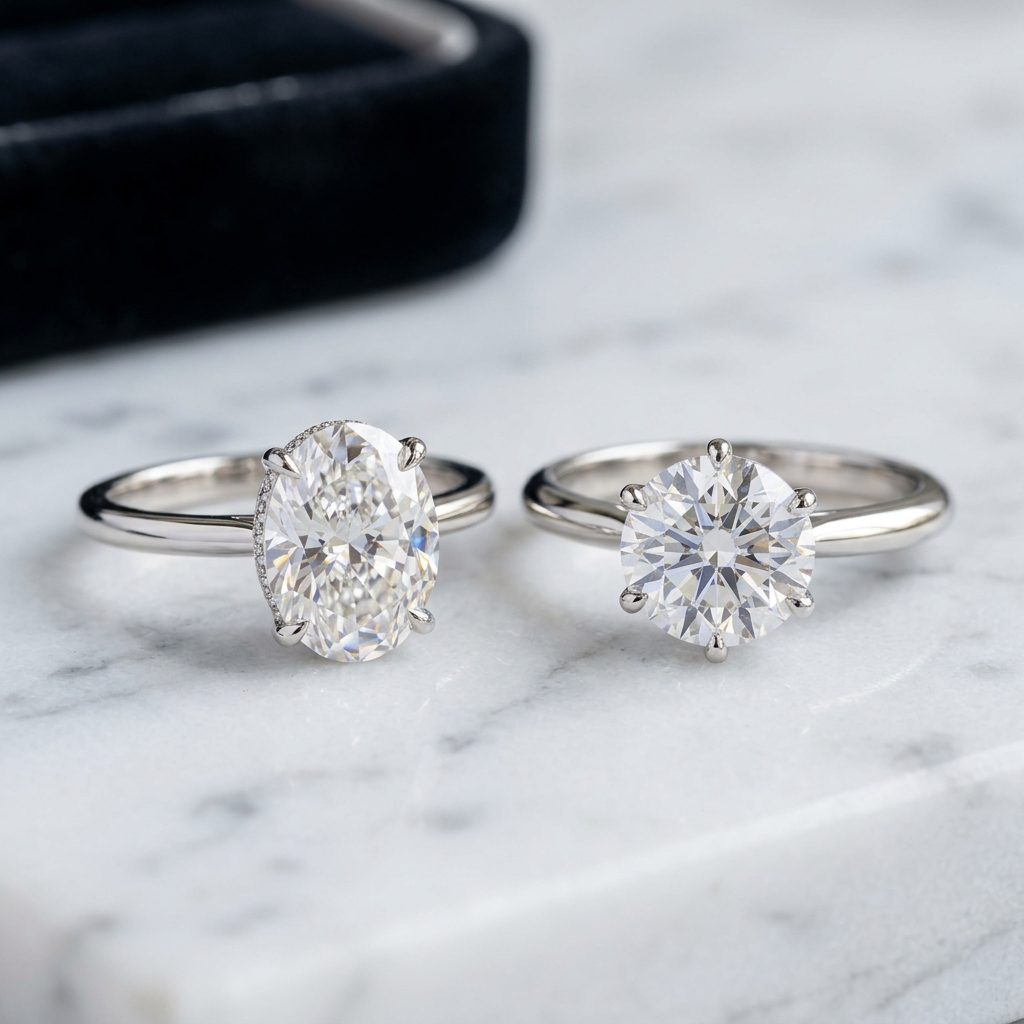
$5,000 is a meaningful engagement ring budget — but what it buys depends almost entirely on two decisions: lab grown or natural, and where you shop. This guide breaks down exactly what’s available at this price point in 2026, across diamond types, shapes, and settings.

How Far Does $5,000 Go in 2026? Lab Grown vs. Natural
Lab-grown diamond prices have fallen significantly since 2020, when they were roughly 35% cheaper than natural. Advances in HPHT and CVD growing technology scaled production enough to drive that gap to 70–80% by 2026. The result: the same $5,000 now buys dramatically different rings depending on which type you choose.
Both options use identical materials. Lab-grown diamonds are chemically, physically, and optically identical to natural diamonds — the difference is origin and supply chain, not quality. IGI certifies both types using the same grading scales. An IGI-certified lab grown diamond with excellent cut and VS2/G color is the same quality standard as an IGI-certified natural with the same grades.
| Diamond Type | Carat at $5,000 | Quality Tier | Certification |
|---|---|---|---|
| Lab Grown | 2.0–2.5 carat | VS2/G, Excellent cut | IGI |
| Natural | 1.0–1.5 carat | VS2/G, Excellent cut | IGI |

The one real trade-off with lab grown: resale value is near zero, because lab diamonds can be manufactured at scale. Natural diamonds hold limited resale value too — typically 20–50% of retail price — but they hold more than lab. If you plan to wear this ring for life and don’t intend to sell it, lab grown is the rational choice at a $5,000 budget.
Best Ring Styles at a $5,000 Budget
The setting style determines where your money goes. A solitaire directs nearly the full budget toward the center diamond. This is the right choice if carat weight matters most, and it’s what most buyers choose when they want maximum size. At $5,000 in lab grown, a solitaire gets you a 2.0–2.5 carat center stone in 14k white gold — a genuinely impressive ring.
A halo setting surrounds a slightly smaller center stone with a ring of small accent diamonds, creating the impression of a larger stone from across the room. The center typically costs $3,200–$4,500, with the full ring staying within $5,000. The visual upgrade is real — a 1.5-carat halo reads as larger than a 2-carat plain solitaire from normal viewing distance.
Three-stone rings carry traditional meaning (past, present, future) and work well at this budget. The center stone is flanked by two smaller stones at roughly 30–50% of its carat weight. A pavé band — small diamonds set along the band — adds sparkle without meaningfully increasing the total price. All of these styles are achievable in lab grown within $5,000. Browse 2-carat lab grown ring styles at Brillianteers.
Diamond Size by Shape: What $5,000 Gets You
Round brilliant commands the highest price per carat of any diamond shape. It requires the most rough diamond material to cut and has the highest market demand. Every other shape cuts from the same rough at lower waste, which is why ovals, cushions, and emerald cuts give you more diamond for the same money.
Emerald cuts require higher clarity because their step-cut facets create a window effect that makes inclusions more visible. If you choose an emerald cut, step up from VS2 to VS1 clarity — the incremental cost is modest and the stone will look significantly cleaner. Ovals carry no such requirement and are the best value shape for buyers prioritizing face-up size.
| Shape | Lab Grown at $5K | Natural at $5K | Notes |
|---|---|---|---|
| Round Brilliant | 2.0–2.3 carat | 1.0–1.2 carat | Highest price per carat; maximum brilliance |
| Oval | 2.2–2.7 carat | 1.2–1.5 carat | Faces up larger; elongates the finger |
| Cushion | 2.2–2.6 carat | 1.1–1.4 carat | Soft romantic look; popular in halo settings |
| Emerald Cut | 2.3–2.8 carat | 1.2–1.5 carat | Use VS1 clarity; dramatic step-cut look |
| Pear | 2.2–2.6 carat | 1.1–1.4 carat | Points elongate the finger; distinctive silhouette |
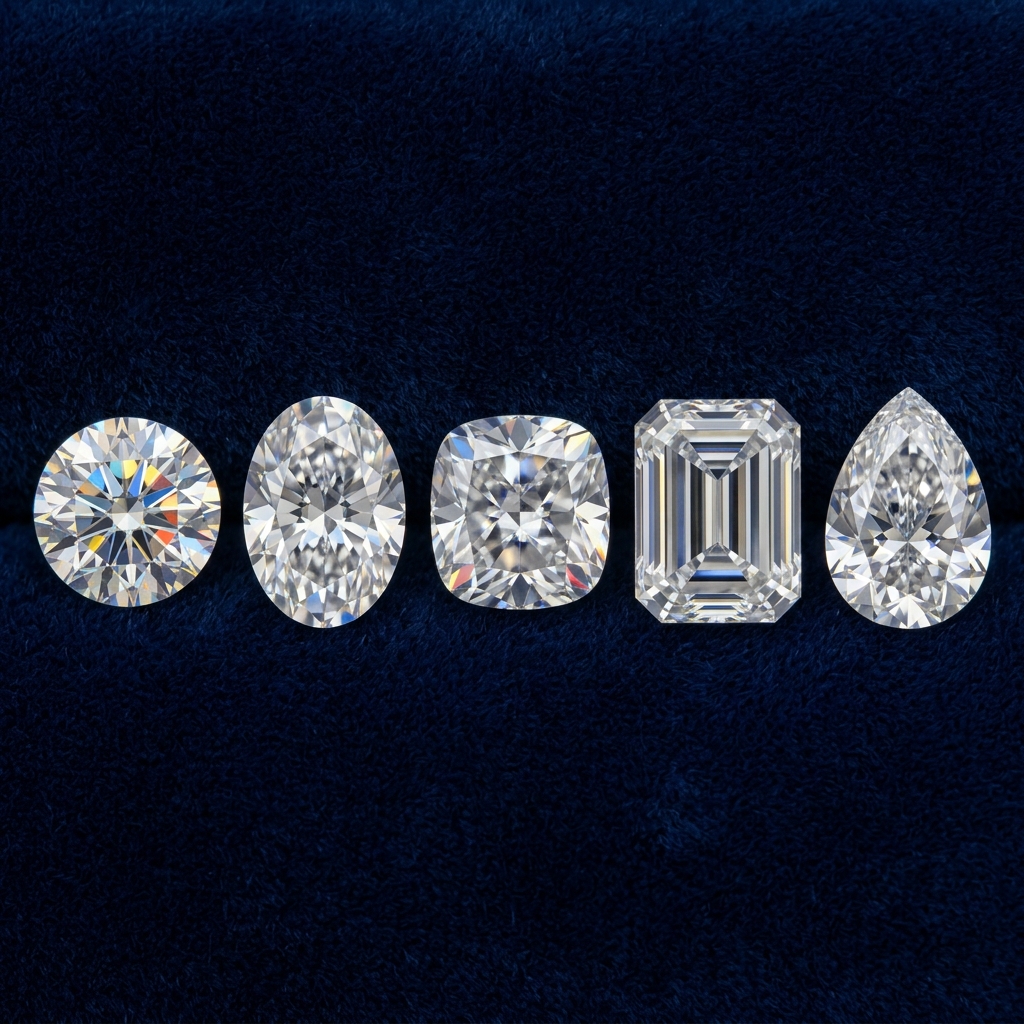
Lab grown 3-carat lab grown diamond rings are reachable in oval and emerald cuts within or just above $5,000. At that size, the visual impact is significant — equivalent to what a $35,000–$50,000 natural diamond ring would produce.
Where to Spend vs. Save Within $5,000
The 4Cs are not equally important to how a ring looks. Cut grade directly affects brilliance — how much light the diamond returns to your eye. Every other grade describes what’s absent from the stone (inclusions, color tint). An IGI Excellent cut grade is non-negotiable. Never buy a Very Good or lower cut if you care about the ring looking its best.
Color grades D through G are effectively indistinguishable to the naked eye in white gold or platinum settings. H and I still look white in most settings, especially in yellow or rose gold where a slightly warmer tone is expected. Stepping from D to G saves 15–20% of the diamond cost — money that goes toward carat weight without any visible trade-off.
| Factor | Recommended Grade | Savings vs. Premium Grade |
|---|---|---|
| Cut | Excellent — never compromise | N/A — this is the only non-negotiable |
| Color | G–H in white gold; H–I in yellow/rose gold | 15–20% vs. D–F |
| Clarity | VS2–SI1 (eye-clean for most stones under 2ct) | 10–15% vs. VVS |
| Metal | 14k white gold | 30–40% vs. platinum |
| Shape | Oval or cushion if face-up size matters | 15–20% per carat vs. round |
Natural Diamond Engagement Ring Options at $5,000
Natural diamonds at $5,000 produce genuinely beautiful rings. A 1.2-carat IGI-certified excellent cut stone is visually impressive, particularly in a halo or pavé setting that amplifies the center. The decision to choose natural over lab grown at this price point typically comes down to one thing: whether rarity and origin matter to the buyer or the person receiving the ring.
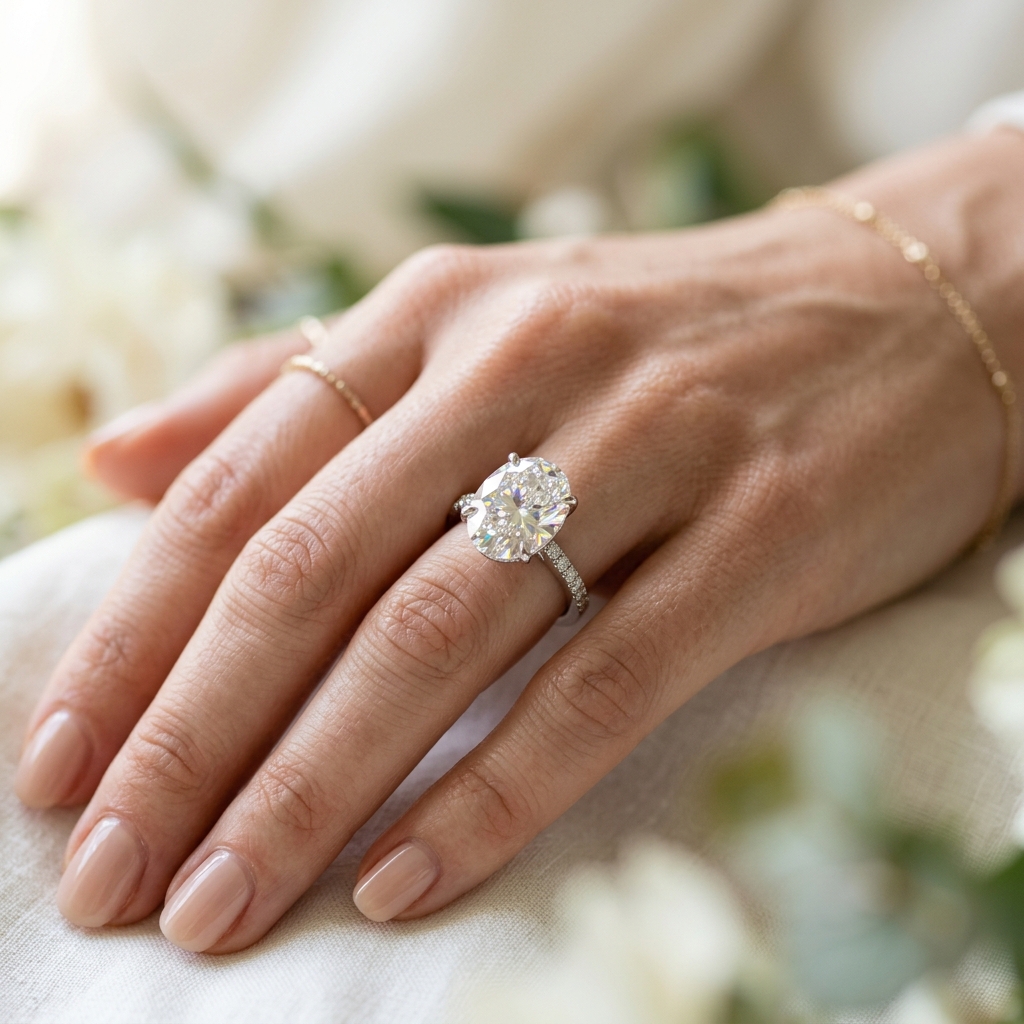
For a 1-carat natural diamond ring, $5,000 opens up real flexibility in cut and setting style. For a 1.5-carat natural diamond ring, $5,000 is a starting point — SI1/H quality at 1.5 carats is reachable with the right stone selection. Brillianteers also carries 2-carat diamond rings across both lab grown and natural; worth seeing the full range before deciding.
Clarity-enhanced natural diamonds are another option worth knowing about. These are real earth-mined diamonds treated to reduce the visibility of inclusions, which brings the price down meaningfully while maintaining the natural origin. Brillianteers specializes in clarity-enhanced stones and can explain the trade-offs in detail.
Financing Your Ring: When $5,000 Is Your Starting Point, Not Your Ceiling
0% financing means no interest for the term of the loan — you pay exactly the retail price whether you spread it over months or pay upfront. The total cost is identical. The only difference is the timing of cash outflow.
For a $5,000 buyer, the jump from a 2-carat lab grown to a 2.5-carat lab grown might require adding $1,500–$2,000. On a 12-month 0% plan, that’s roughly $125–$167 more per month. Whether that’s the right call depends on your financial situation, but knowing the option exists changes what rings you should be looking at.
Ask Brillianteers about current financing terms and approval requirements. The 0% period and monthly amount depend on the loan total and credit approval.
Frequently Asked Questions
What can I get for $5,000 for an engagement ring in 2026?
At $5,000 in 2026, you can get a lab-grown diamond ring with a 2.0–2.5 carat center stone in VS2/G quality, excellent cut, IGI certified, set in 14k gold from a specialist online retailer. For a natural diamond, $5,000 gets approximately 1.0–1.5 carats in the same quality tier, IGI certified. The single biggest variable is lab grown vs. natural — that choice determines the carat size more than any other factor.
Is $5,000 a good budget for an engagement ring?
Yes. $5,000 is a strong engagement ring budget in 2026. It’s at or above the commonly cited US average purchase price, and with online specialist pricing, it gives you access to significant diamond size in lab grown or meaningful quality in natural. You do not need to feel like you’re compromising at $5,000. The “three months salary” rule is a marketing invention from De Beers in the 1980s — not a financial principle.
What size diamond can I get for $5,000?
For a lab-grown diamond at $5,000, expect 2.0–2.5 carats in round brilliant or 2.2–2.7 carats in oval, VS2/G quality, excellent cut, IGI certified in 14k white gold. For a natural diamond, expect 1.0–1.5 carats in round brilliant or 1.2–1.6 carats in oval, IGI certified, same quality tier. These ranges are from specialist online retailers; physical retail jewelry stores will offer meaningfully less for the same money.
Should I buy lab grown or natural with a $5,000 budget?
Lab grown makes the most sense for buyers who want visible size and impact. At $5,000, lab grown gets you roughly twice the carat weight of natural — a difference anyone can see. Natural makes more sense if your partner specifically values rarity, if the ring is intended as a family heirloom, or if natural origin matters culturally. Neither is wrong. It depends entirely on what the buyer values.
What is the largest diamond you can get for $5,000?
The largest diamond achievable at $5,000 depends on shape and type. In lab-grown emerald cut, you can reach 2.5–2.8 carats. In lab-grown oval, 2.2–2.7 carats. For natural diamonds, oval and emerald cuts max out at approximately 1.4–1.6 carats at this budget. Never sacrifice cut quality to gain more carats — an Excellent cut on a 2-carat stone will look dramatically better than a Very Good cut on a 2.4-carat stone.
Can I get a 2-carat diamond ring for $5,000?
Yes, comfortably in lab grown. A 2-carat lab-grown diamond ring in VS2/G with excellent cut and IGI certification typically ranges from $3,500–$5,000 depending on shape, from a specialist retailer like Brillianteers. Round brilliants sit at the top of that range; ovals and cushions often come in below $4,500 for 2 carats. Natural 2-carat rings are well above $5,000 — typically $12,000–$20,000 for equivalent certified quality.
How do I get the most out of a $5,000 engagement ring budget?
Four decisions give you the most value at $5,000: choose lab grown over natural; choose oval or cushion over round; set the stone in 14k gold rather than platinum; and accept G–H color rather than D–F. Combined, these choices can increase your affordable carat weight by 40–50% with no visible compromise in appearance. The one thing not to compromise on: always buy Excellent cut grade, regardless of everything else.

Shop Engagement Rings at Brillianteers
Lab grown and natural diamonds. IGI certified. Priced 15–25% below James Allen and Blue Nile on equivalent certified stones. 0% financing available.