


In This Guide
$2,000 is one of the most common real-world engagement ring budgets. It’s enough to buy something genuinely beautiful — but only if you spend it right. This guide covers exactly what’s available at this price in 2026, what specs to target, and where most buyers go wrong.
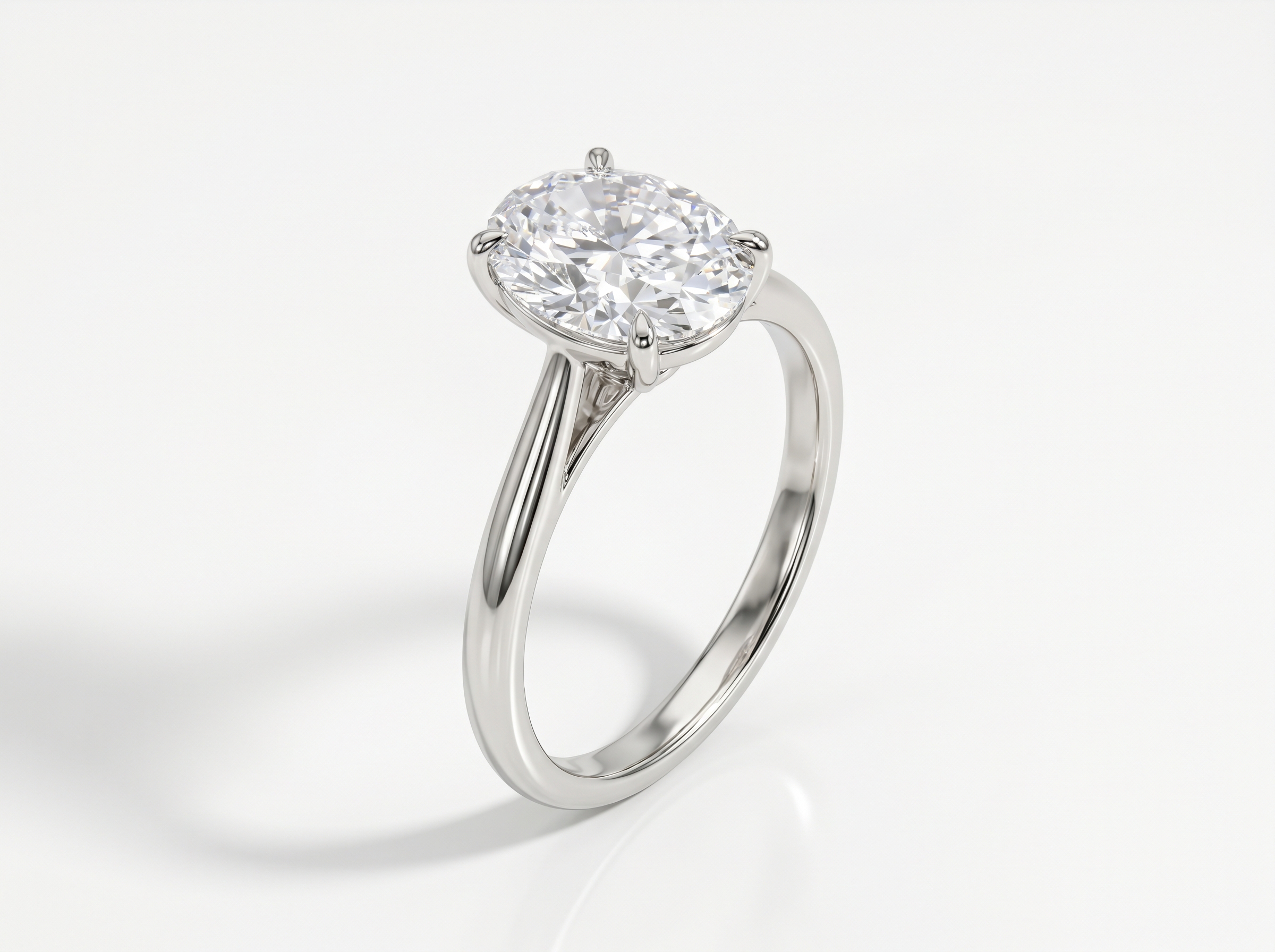
Lab Grown vs Natural Diamond at $2,000
| $2,000 Budget | Lab Grown Diamond | Natural Diamond |
|---|---|---|
| Carat size (round) | 1.2 – 1.5 ct | 0.5 – 0.7 ct |
| Carat size (oval) | 1.5 – 1.8 ct | 0.5 – 0.75 ct |
| Certification | IGI | IGI |
| Cut quality | Excellent available | Excellent available |
| Color / Clarity | G / VS2 or better | G / VS2 or better |
| Setting | 14k white or yellow gold | 14k white or yellow gold |
| Resale value | Low (same as retail natural) | Better (but still not good) |
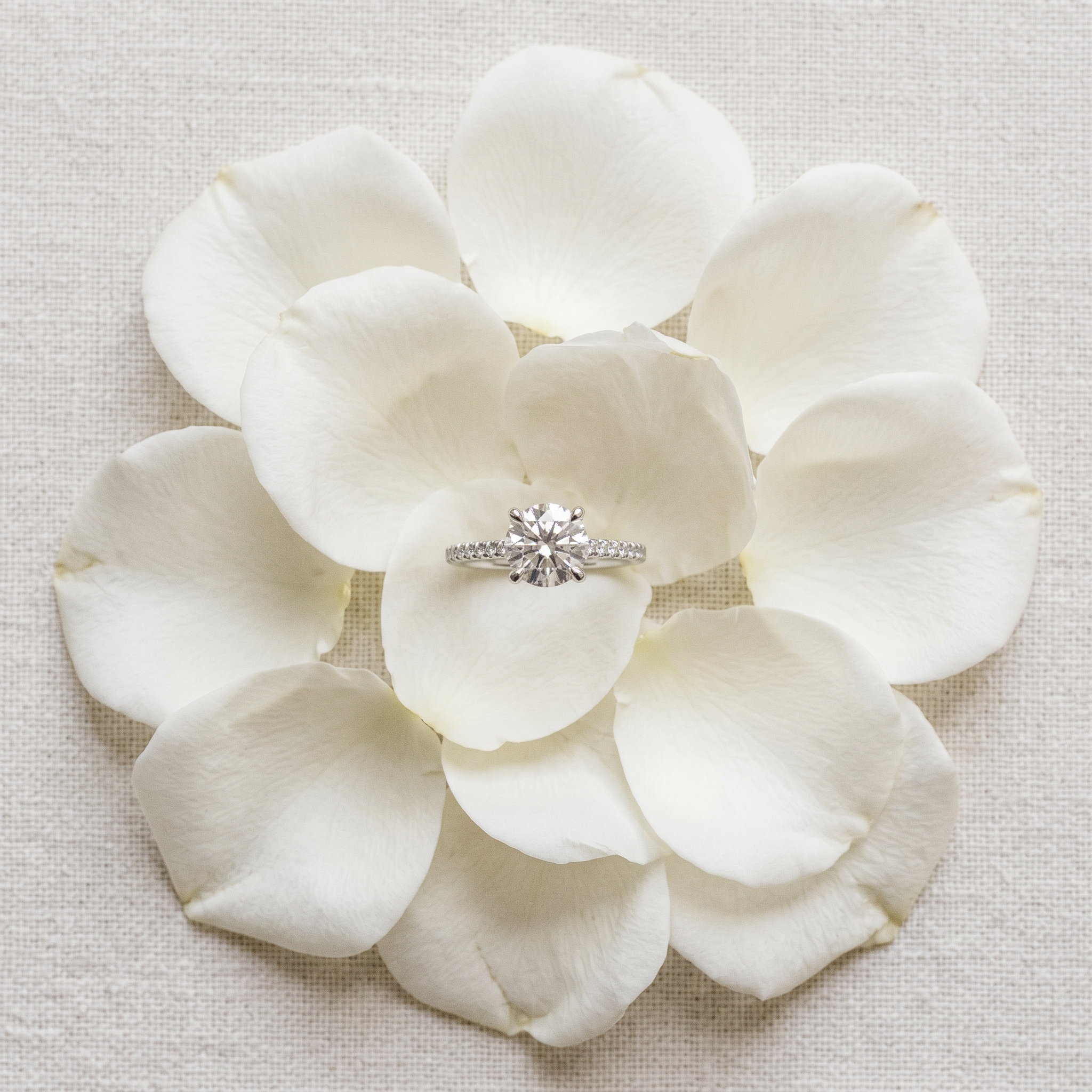
The resale argument for natural at this budget is weak. A 0.6-carat natural purchased at $2,000 retail won’t resell for anywhere close to $2,000 either. If resale matters, buy a larger natural stone with a larger budget. At $2,000, almost every buyer is better served by the lab grown option.
What You Actually Get: Carat, Shape, and Quality
| Spec | Target | Why |
|---|---|---|
| Cut grade | Excellent or Very Good | Determines sparkle — never skip this |
| Color | G or H | Eye-clean colorless appearance; D–F costs more with no visible gain |
| Clarity | VS2 or eye-clean SI1 | No visible inclusions; VVS is invisible and overpriced at this range |
| Carat | 1.2–1.5ct round / 1.5–1.8ct oval | Realistic target in lab grown at $2,000 |
| Certification | IGI (verify at igi.org) | Independent grade verification — never trust in-house certs |
Best Diamond Shapes at a $2,000 Budget
| Shape | Expected Carat at $2,000 (Lab Grown) | Notes |
|---|---|---|
| Round Brilliant | 1.2 – 1.5 ct | Most popular, highest sparkle, highest price per carat |
| Oval | 1.5 – 1.8 ct | Appears larger, elongates the finger — excellent value at this budget |
| Cushion | 1.4 – 1.7 ct | Romantic, vintage aesthetic, lower price per carat than round |
| Princess | 1.3 – 1.6 ct | Square, geometric, needs a protective setting (protect the corners) |
| Pear | 1.4 – 1.7 ct | Teardrop shape, finger-lengthening effect, distinctive look |
| Emerald | 1.3 – 1.6 ct | Step-cut elegance — clarity matters more here, stay at VS2+ |
For a $2,000 budget, oval is the best value by a meaningful margin — you get the most visible stone for the price, and the shape has been the fastest-growing trend in engagement rings over the last three years. Browse our full range of engagement rings under $2,000 across all shapes.
What to Avoid at $2,000
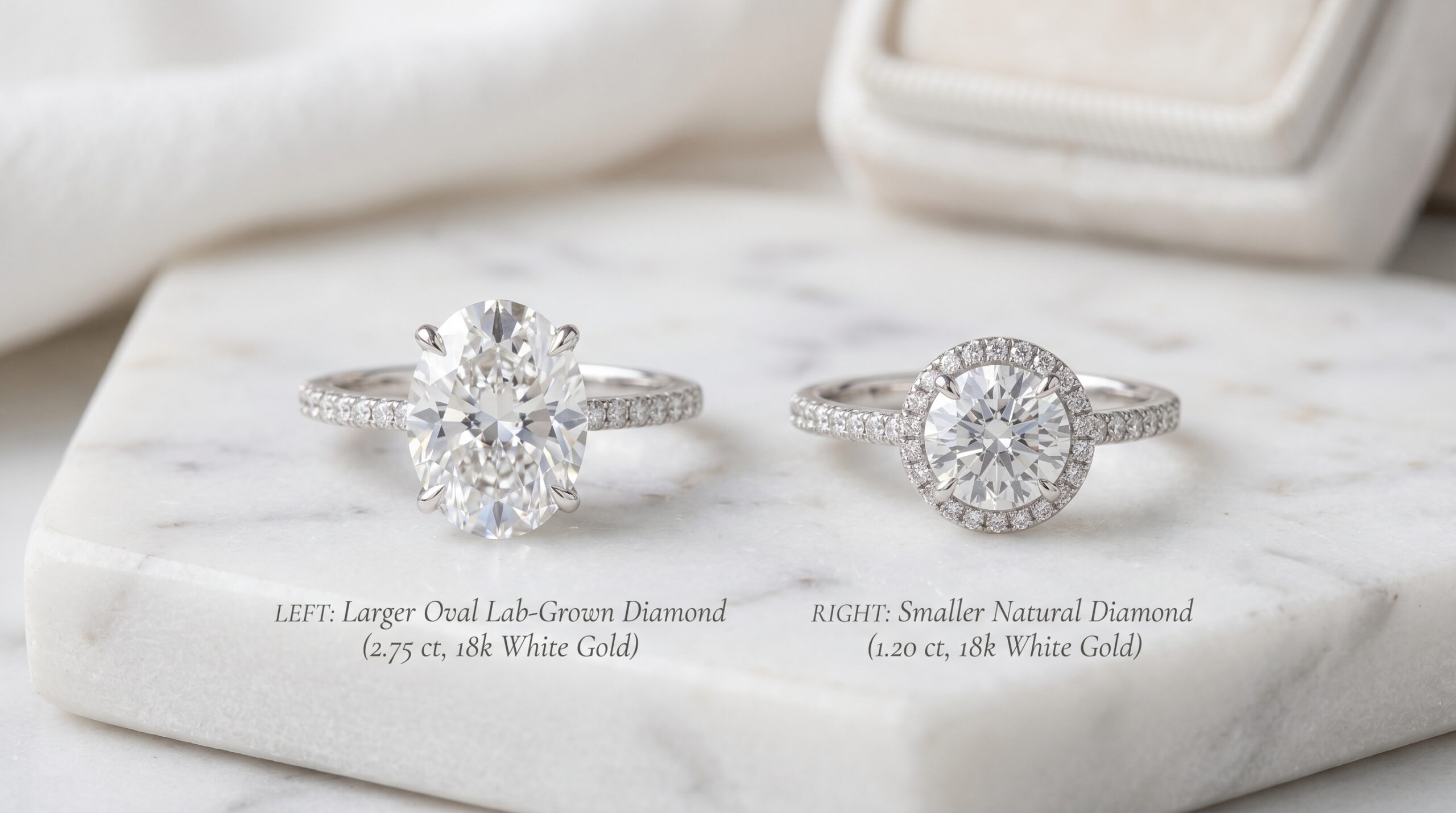
Skip the halo at this budget. Halos were invented to make small natural diamonds look larger. At $2,000 for a lab grown diamond, you don’t need a halo — you can afford a center stone that’s large enough on its own. A solitaire with a 1.4-carat oval looks better than a halo around a 0.8-carat center stone, and costs the same or less.
Don’t buy from a physical retail store. Brick-and-mortar jewelry stores have 150–200% markup over wholesale to cover rent, staff, and showroom costs. The same IGI-certified stone you’d find at a mall jeweler for $3,500 is available from a specialist online retailer for $2,000. Verify the certificate at igi.org and the quality is identical.
Don’t sacrifice cut for carats. A 1.6-carat stone with a Good cut grade looks noticeably duller than a 1.3-carat stone with an Excellent cut. Cut is the one spec that has a direct and visible impact on how a diamond looks day-to-day. Never go below Very Good.
Our Recommendation at $2,000
The $2,000 Sweet Spot
Lab grown diamond, 1.4–1.5 carat oval or cushion, G color, VS2 clarity, Excellent cut, IGI certified, 14k white or yellow gold simple solitaire or thin pavé band. This combination gives you a ring that photographs beautifully, looks impressive in person, and sits well within budget. If your partner wears yellow gold, a slightly warmer H color works at no visible difference.
If round is preferred: 1.2–1.3 carat, same grades. The size difference between oval and round at this budget is real — about 15–20% in apparent face-up size — worth knowing before choosing a shape.
See what’s available now: engagement rings under $2,000 and 2-carat lab grown diamond rings (for a slightly higher investment that gets you into the 2ct range).
Frequently Asked Questions
Is $2,000 a good budget for an engagement ring?
Yes. $2,000 is a real and meaningful engagement ring budget in 2026. For lab grown diamonds, it buys a 1.2–1.5 carat round brilliant or 1.5–1.8 carat oval in VS2/G, Excellent cut — a ring that looks genuinely impressive. The idea that $2,000 is a “low” budget is based on natural diamond pricing from a decade ago. Lab grown diamonds changed what this budget delivers.
What size diamond can I get for $2,000?
For a lab grown diamond ring: 1.2–1.5 carats in round brilliant, or 1.5–1.8 carats in oval, in G/VS2 Excellent cut, 14k gold. For a natural diamond ring: approximately 0.5–0.7 carats in the same quality grades. Both are real, certified diamonds — the carat difference reflects the 70–80% price gap between lab grown and natural in 2026.
Should I buy a lab grown or natural diamond for $2,000?
Lab grown, almost certainly. At $2,000, the choice is between a 1.4-carat lab grown and a 0.6-carat natural. The size difference is visible. Both hold resale value poorly at retail prices, so the investment argument for natural is weak at this price point. Lab grown is the right call unless your partner has specifically requested a natural stone.
What’s the best diamond shape for a $2,000 engagement ring?
Oval, for value. Oval diamonds appear larger per carat than round brilliant, cost less per carat, and have been the fastest-growing engagement ring shape for several years. At $2,000 you can get a 1.5–1.8 carat oval lab grown versus a 1.2–1.5 carat round for the same price. If sparkle is the priority and shape is flexible, oval is the strongest choice at this budget.
Can I get a 2-carat diamond for $2,000?
Not at VS2/G, Excellent cut in a standard solitaire at $2,000. A 2-carat lab grown in those specs typically starts around $2,200–$2,800. You can get very close at $2,000 if you choose an oval or cushion (which have lower price per carat than round), or if you’re willing to go to G/SI1 with a stone you’ve verified is eye-clean. Browse our 2-carat lab grown diamond rings to see current pricing.
What’s the difference between a $2,000 ring and a $3,500 ring?
At $3,500 for a lab grown diamond ring, you’re looking at 1.7–2.2 carats in round, or 2–2.5 carats in oval, in the same quality grades. The jump from 1.4ct to 2ct is visible — not dramatic, but noticeable side-by-side. $3,500 also opens up more setting options (more elaborate pavé bands, custom designs) and slightly better clarity grades without budget strain. If the budget is flexible, the $3,000–$3,500 range is a meaningful step up.
Does Brillianteers have engagement rings under $2,000?
Yes. Our engagement rings under $2,000 collection includes lab grown and natural diamond solitaires, halos, and pavé styles across round, oval, cushion, and other shapes. All certified stones. No in-house grading. Pricing is typically 10–25% below major national retailers on equivalent certified stones.
See What $2,000 Gets You at Brillianteers
IGI-certified lab grown diamonds. Real photos of every stone. No retail markup.